Voice AI Data · 2026-08-07 · 4 min read
When Do Patients Actually Call? Our Practice Data Says 5pm, and It's Not Close
Every AI receptionist vendor quotes the same generic after-hours statistics. We charted actual inbound calls by hour from a live plastic surgery practice. The peak is exactly when the front desk is packing up.
TL;DR
- We charted 860 real inbound calls over 120 days from a live plastic surgery practice we operate an AI receptionist for, instead of quoting industry averages
- 5pm is the peak at 134 calls, nearly triple the midday average of 47. The spike lands exactly as the front desk leaves, and 59% of all calls arrive outside business hours entirely
- This practice was missing 60 calls in a single month before 24/7 coverage; the AI receptionist then recovered 656 missed calls and booked 31 consultations in 2.5 months
- Generic "40% of leads arrive after hours" stats undersell the problem. The calls don't trickle in overnight, they wall up at closing time
Everyone Quotes Averages. Here's a Chart From a Real Practice.
If you have researched AI receptionists at all, you have met the statistics. Some large share of leads arrive after hours. Each missed call is worth some dollar range in lifetime value. The numbers float from vendor blog to vendor blog, unsourced and interchangeable.
We wanted to know something more specific: for an actual practice, hour by hour, when does the phone ring?
So we pulled every inbound call from a plastic surgery and med spa practice we run a 24/7 AI receptionist for: 860 calls across 120 days, charted by hour of day.
The 5pm Wall
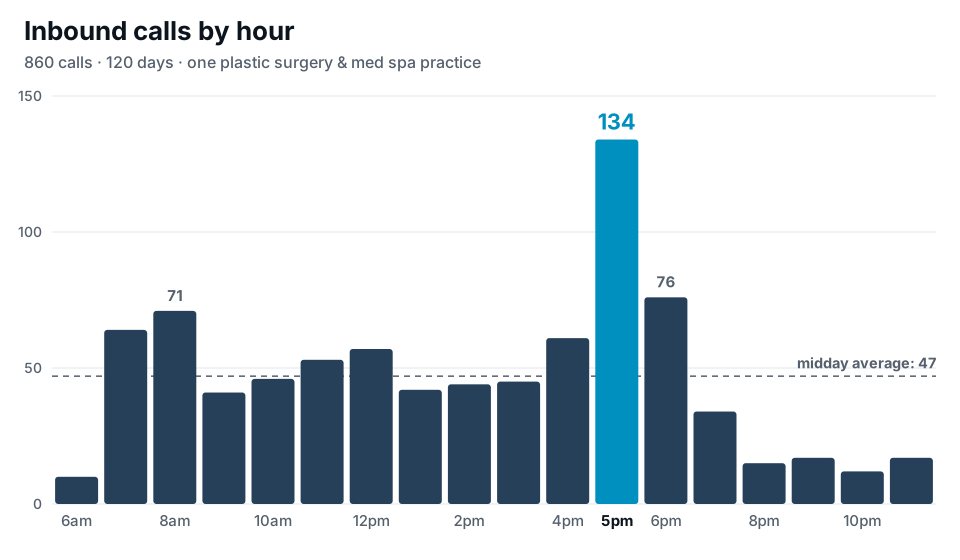
The chart has one story in it. The 5pm hour logged 134 calls, against a midday average of 47. Nearly three times the midday rate, at exactly the hour the front desk is shutting down. The second spike is 7am and 8am, with 135 calls before the day properly starts. And in total, 59% of all inbound calls arrived outside business hours.
The why is almost embarrassingly simple once you see it. Patients researching a procedure are working the same hours the practice works. They call about their body before work and after work, almost never during it. The call volume peaks precisely where phone coverage ends.
Which means the generic "after hours" framing actually undersells the problem. The picture isn't calls trickling in at 10pm. It is a surge of the day's highest-intent callers arriving in a single hour, on the wrong side of the closing bell.
What Those Calls Turned Out to Be Worth
Before this practice moved to 24/7 coverage, it was missing 60 calls in a single month. Individually explainable: a treatment in progress, two lines ringing at once, everyone gone at 5:15.
After the AI receptionist went live on exactly those calls, the count over the following 2.5 months came to 656 missed calls recovered and 31 consultations booked, from demand the practice had already paid its marketing budget to generate.
A caller at 5:20pm asking about a consultation is not a tire-kicker. They chose to dial instead of filling out a form, at the end of a workday, about a procedure they have been thinking about since lunch. That is the single highest-intent moment in the whole funnel, and the default outcome for it used to be voicemail.
What To Do With This
You do not need our tooling to act on the finding. Three moves, in ascending order of effort:
- Pull your own call log by hour. Every phone system exports this. If your pattern matches ours, you now know exactly which hour is bleeding.
- Cover the closing-time wall and the early morning before worrying about 2am. Overnight coverage sounds impressive, but our data puts the surges at 5pm to 7pm and 7am to 8am. That is where the recoverable revenue is concentrated.
- Whatever answers those calls, make sure it can book. A message service that takes a name captures nothing. The caller wanted an appointment; the fix is only real if the appointment gets made on that call.
The practices that get this right aren't answering more calls out of politeness. They are collecting the highest-intent hour of the day while their competitors' phones ring out at 5:15.
Frequently asked questions
What time of day do patients call a plastic surgery or med spa practice most?
In our data from one practice (860 inbound calls over 120 days), 5pm is the peak hour at 134 calls, nearly three times the midday average of 47. The spike lands exactly as the front desk is wrapping up, which is why so much of it historically went to voicemail.
How many calls does a practice actually miss?
The practice in this data was missing 60 calls in a single month before coverage went 24/7. After an AI receptionist went live on those calls, it recovered 656 missed calls and booked 31 consultations in 2.5 months.
Why do patients call at the end of the workday?
Because that is when they are off work too. A patient researching a procedure browses on their lunch break and calls when they leave the office, which lines up almost exactly with when practice phone coverage ends.
Is after-hours call coverage worth it for a small practice?
The math in our data says the 5pm hour alone justifies it. Every recovered call in that window is a caller with high enough intent to dial instead of filling out a form, at the exact moment competitors' phones are also going unanswered.